


Shower Head with Filter
 Luxurious water pressure
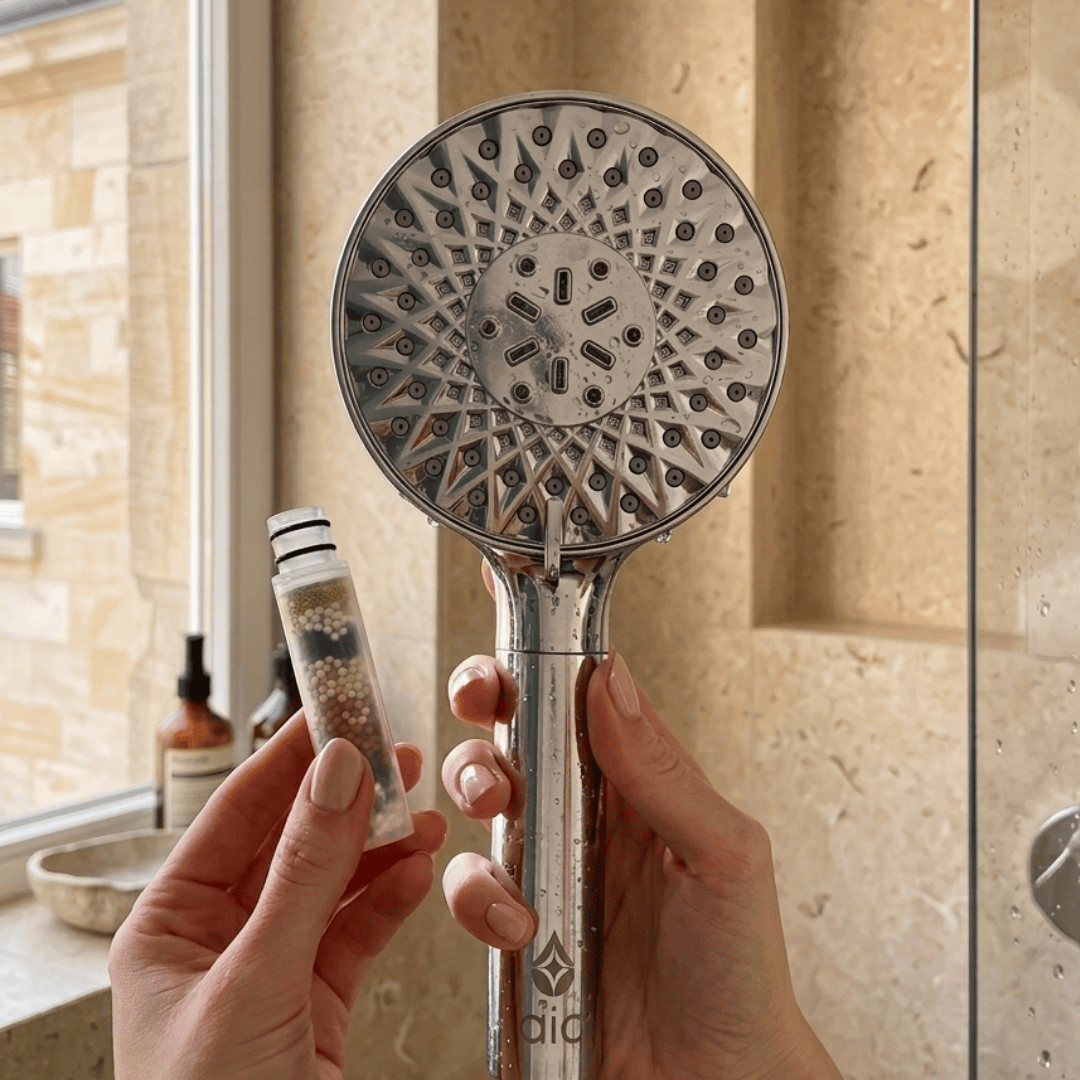
 Swap in seconds
 Less residue


A difference you can feel
-

Gentler on skin & hair
-

A visibly cleaner bathroom
-

Helps save resources


Softer hair
Our filter reduces limescale, chlorine and other impurities – for noticeably smoother, shinier hair.

Radiant skin
Less chlorine and fewer pollutants mean less irritation – your skin stays balanced and hydrated.

Cleaner shower
Purer water protects your shower and pipes from limescale – for a clean bathroom and steady water pressure.

Smart care
Shower gel and shampoo lather better in softer water, so you need less of them.
Minimalist design, maximum effect.


Dull hair or irritated skin?

Many of these problems start with limescale, chlorine and other substances that can be present even in high-quality tap water.

Stubborn build-up in your bathroom?

We cleanse, we apply cream, we take care of our skin – then scrub the residue our own water leaves behind off the shower with yet more cleaning product.

Your smart solution

The integrated filter in the Aia Pure shower head makes your shower water purer – and your care routine more effective, without adding another lotion.


Our mission
"With Aia Pure, you trade brittle hair and dry skin for a glow you can count on every morning."

FAQ
What are filtered shower heads good for?
Filtered shower heads are a popular way to improve water quality right before it reaches you, and to reduce the effects hard and treated water has on skin, hair and the bathroom.
They make the biggest difference if you struggle with dry, itchy skin or brittle hair, or if your shower is covered in limescale marks.
What gets filtered out of the water?
- Limescale: "Hard" water – water especially high in limescale – comes from a high level of dissolved minerals, mainly calcium and magnesium ions. Hardness builds up as rainwater seeps through layers of chalky rock on its way into the groundwater.
- Chlorine is used for disinfection at many water treatment plants. In the shower it evaporates and can be inhaled, or dry out and irritate skin and hair.
- Heavy metals and sediment: heavy metals such as lead and copper can enter the water from old pipework. Sediment means rust particles, sand or suspended matter that can cloud the water.
What is "hard water"?
Water is officially classed as "hard" above 14 °dH (degrees of German hardness, roughly 250 ppm calcium carbonate).
The cause is always the same: a high level of dissolved minerals, mainly calcium and magnesium ions.
These minerals are what most people call limescale – the so-called hardness minerals in water.
What does hard water do?
- Limescale marks: when water evaporates, the minerals stay behind. Those are the white marks you see on shower screens, fittings and shower heads.
- More soap: hardness minerals react with soap and shower gel and make them less effective, so you need more to work up a lather.
- Skin and hair: hard water can leave skin feeling tight after a shower and hair brittle, because mineral residue settles on the skin.
How often do I need to change the filter?
How will I notice the difference?
You'll feel it on your skin and in your hair – and see it in the bathroom. Filtered water carries less chlorine, fewer metals and less mineral residue. That supports your skin's natural moisture balance, leaves hair smoother and cuts down limescale build-up – all visible signs of purer water.